Role
Product Designer, Front-End Engineer
Team makeup
2 × Product Designers, CEO (acting design & product Lead), Product Manager, 4 × Engineers
Timeframe
11 months
Storehouse was a platform for creating and sharing stories. Combine your images, video, and text with beautiful typography to create rich and engaging visual stories and share them with just the people you want to.
After I joined Storehouse we redesigned the interface from the ground up, launched v2.0 which introduced a privacy-centric model, reworked the iconography, launched an Apple TV version and companion app, launched an Android version, launched a variety of new features in several 2.X releases, and still somehow found time to sleep.
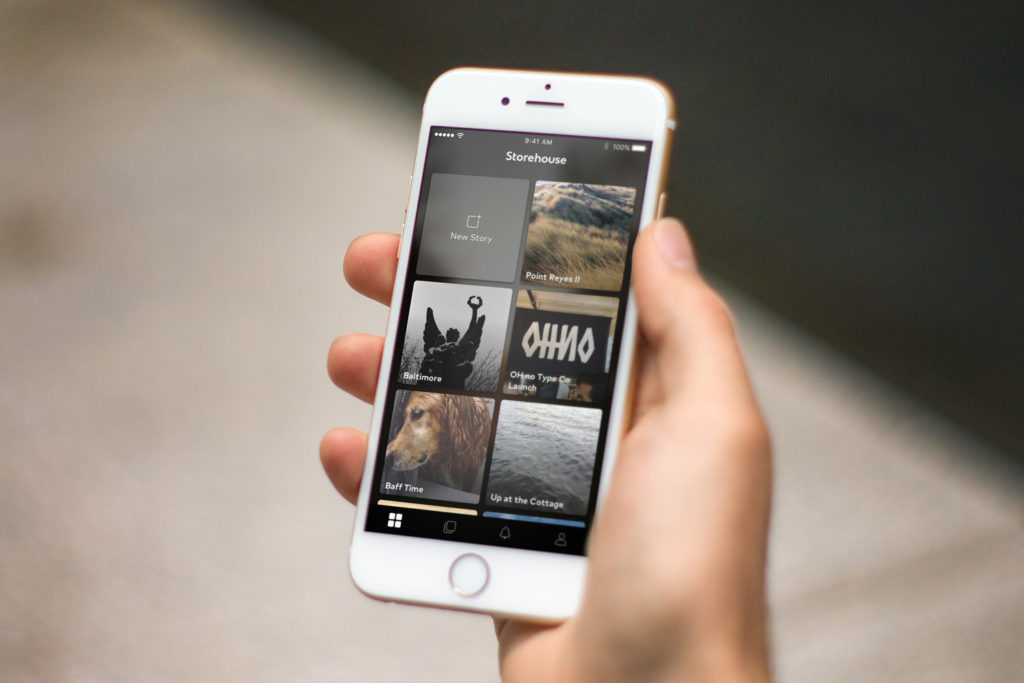
Storehouse was a social media app. Think Instagram meets Medium—long-form stories mixing photo, video, and text. It was easy to add multiple photos to a story, arrange them into a collage with the intuitive editing tools, add a few paragraphs, and finally publish your story out to your network. In 2014 Storehouse won a coveted Apple Design Award.
It was for those reasons I was super excited to join the Storehouse team after I finished graduate school. The opportunity checked all of the boxes I was looking for: product design role working on native apps, photography focused company, West Coast-based. The small team I was joining meant I would be able to flex a lot of different skills from marketing design, to product design, to even contributing to some of the engineering efforts.
Version 2.0
The first version of Storehouse had a very familiar public/private sharing model with other social networks, that is to say, your stories were shared publicly with your network / to your profile by default. With version 2.0, the decision was made to invert that paradigm and move to a privacy-first model.

The biggest promoters of Storehouse weren’t very happy with the new focus on privacy and sharing among smaller circles. It was unsurprising to be honest, as their ability to amplify their work on the app was severely reduced.
We knew there still needed to be a public way to share your stories, so we implemented Spaces. Spaces were basically like a type of shared folder that could be public that anyone could see and contribute to, or private and only for the select people you give access to.
With 2.0 we also experimented with changing the navigation with the main views—stories, spaces, profile—as views you would swipe left/right from the home view to access with no bottom tab bar. There were icons at the top to access those views without swiping similar to our Android version (although the Android version didn’t have the swipe gesture). It tested poorly on mobile so we walked that back pretty quickly and reimplemented the traditional tab bar for iOS.

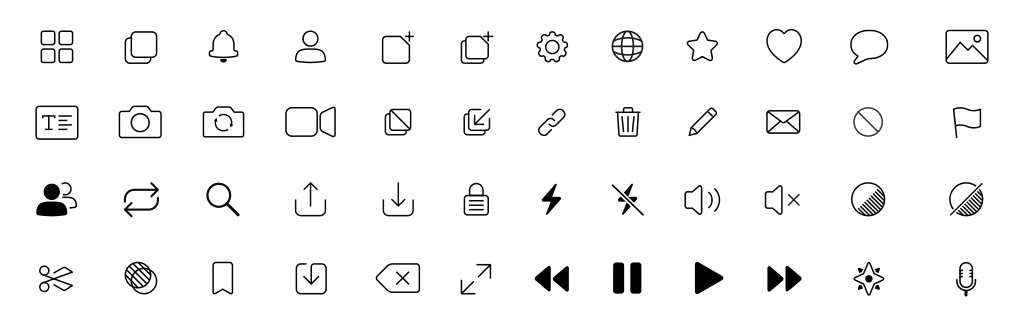
For the new version, we also made some less aggressive changes. We took the time to change out all of our iconography—which had a boxier, sharper aesthetic—to be a bit more friendly and rounded in general. The below icons are a selection of the new icon set that I drew for the new version as well as unreleased experimens we had in the works.
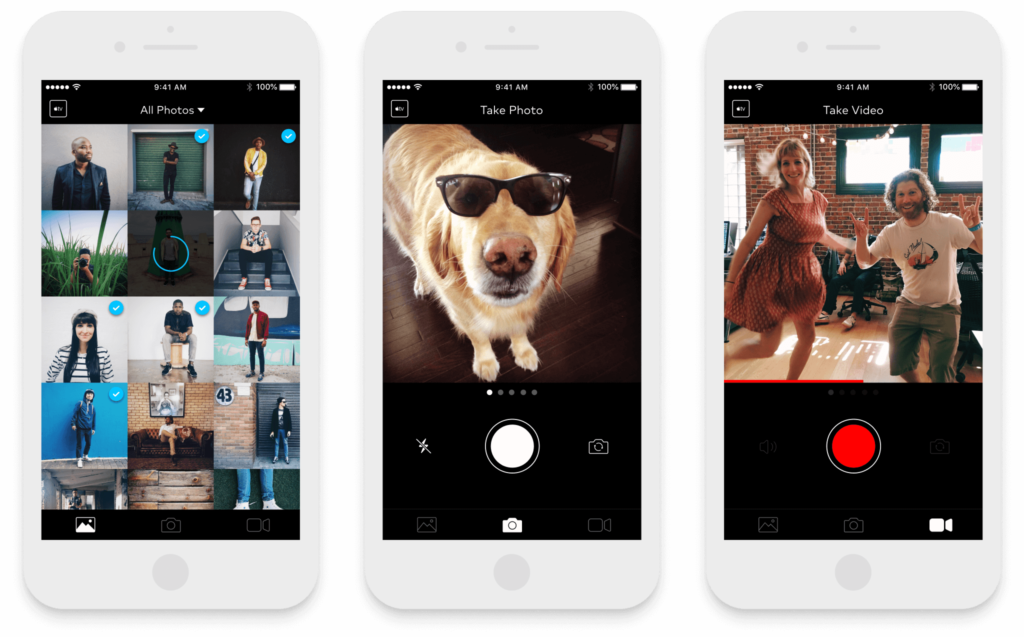
Apple TV & Photo Remote
Storehouse was invited by Apple to be one of the apps launched when they announced tvOS, finally opening the Apple TV to all third-party developers. We jumped at the opportunity.
In a relatively short amount of time, we built the Apple TV version of Storehouse. But the core experience of what Storehouse was, was creating and viewing stories. Viewing stores on the Apple TV, pretty straightforward, but how could you create stories on a device that had no camera or media library?
Storehouse for the Apple TV app’s big focus was the new story mode: a collaborative “film strip” experience that allowed for multiple individuals to add to a single story in real-time. It was fun to leave up on a TV during parties for a synchronous-yet-asynchronous, quasi-photo booth experience.
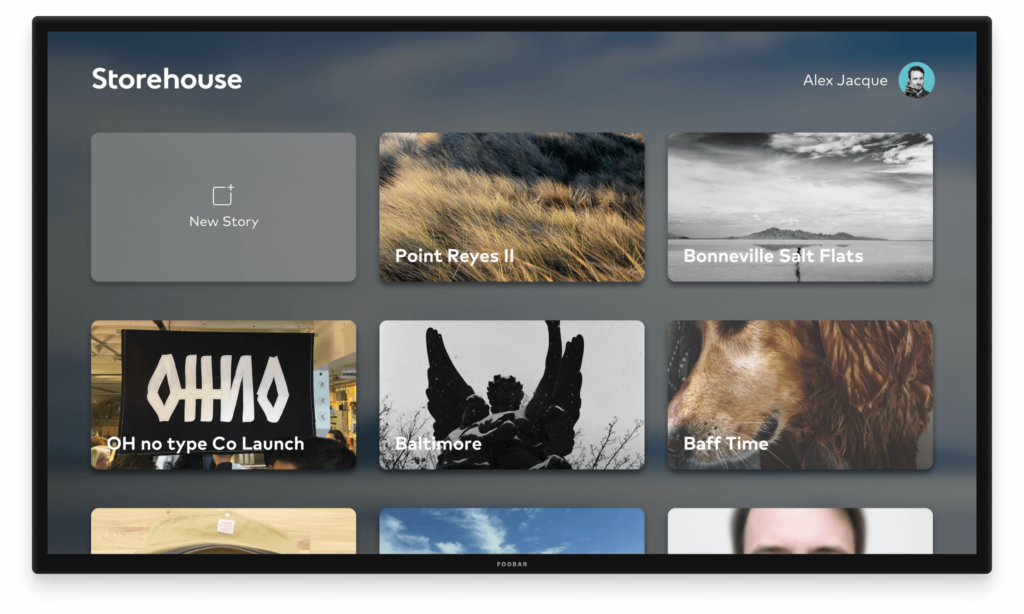
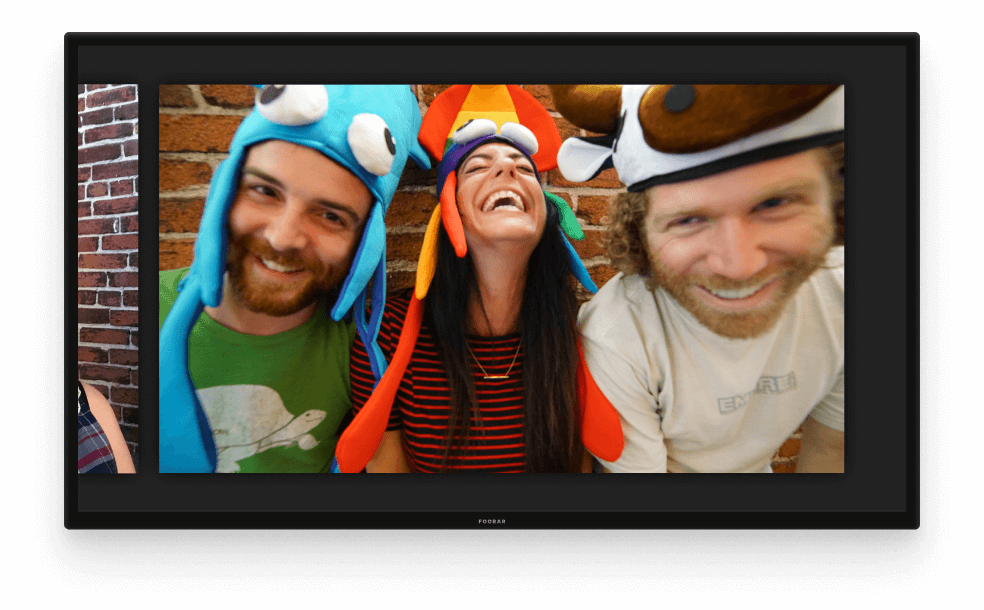
Anyone with our Photo Remote app could connect to an Apple TV on the network running Storehoue in story creation mode. They could upload photos or videos which would be appended to the story one after another. Whoever had the controller could reorder media on the fly while new items were added. Check out the video below to see it in action. ↓
The end of the road
Ultimately, like many startups, Storehouse ran out of runway and the decision was made to close up shop. We didn’t want our customers’ stories to just vanish after all of the care and excitement they had creating, publishing, sharing, and commenting they had done, so we quickly built a story export tool—an LTUE (Last Time User Experience) of sorts. This tool would allow any user to request a magic link to download an archive containing all of their stories that could be hosted on any server that would display those stories just like in Storehouse’s web experience.
Storehouse was acquired by Square in 2016.